The Silent Revolution: How New Energy Vehicles Are Reshaping the Mold Making Industry

The automotive world is electrifying. From Tesla’s dominance to the rapid rise of BYD, NIO, and traditional giants like Volkswagen and GM pivoting to electric, the New Energy Vehicle (NEV)revolution is undeniable. Headlines focus on battery range, autonomous driving, and software updates.
But behind the scenes, a less glamorous yet critically important industry is undergoing its own seismic shift: Precision Mold Manufacturing.
It’s a symbiotic relationship. You can’t build millions of innovative EVs without equally innovative molds. Let’s explore how the demand for electric cars is driving a new era of design, materials, and technology in the mold-making world
1. How does this affect mold makers?
These new materials are often harder, more abrasive, or require different forming processes. Molds must be:
- More durable: Made from harder, wear-resistant steel grades to withstand the abrasion of new materials.
- Larger & More Complex: To form massive, integrated components like underbody panels or battery enclosures that replace multiple smaller parts.
- Designed for New Processes: Molds for processes like hot stamping (which creates ultra-strong, lightweight parts) are themselves complex, temperature-controlled systems.

2. Beyond the Body: The Rise of the Battery Box
An EV isn’t just a car with a battery; it’s a battery with a car built around it. The protective battery enclosure or tray is a safety-critical component that is essentially a giant, complex plastic or metal molding.
This creates a massive new market for mold makers. These enclosures require:
- Extreme Precision: To ensure a perfect, waterproof, and rigid seal to protect the sensitive battery cells inside.
- Integrated Functionality: Molds must now create parts with built-in cooling channels, mounting points, and structural ribs directly from the tool. This demands incredibly complex mold design and conformal cooling channels 3D-printed into the mold to ensure perfect, fast, and even cooling of the plastic.
3. Aesthetic Demands: Sleeker Designs Demand Smarter Molds
EVs are often designed from a clean slate, featuring sleek, minimalist aesthetics with seamless surfaces and sharp character lines. Achieving these complex geometries requires molds of the highest precision.
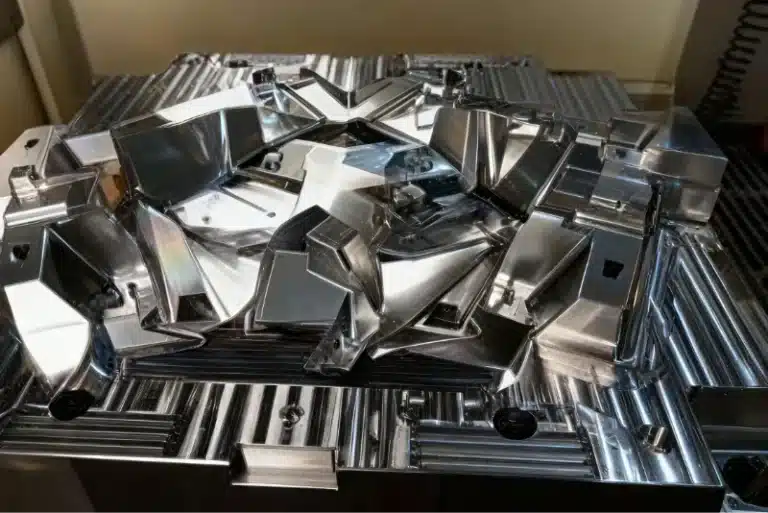
- Higher Gloss Finishes: For piano black trims and glossy pillars, molds require a mirror-like Polish #A1 surface finish, which is extremely time-consuming and requires expert craftsmanship.
- Multi-Material Molding: Interior components often combine hard plastics, soft-touch materials, and even integrated fabrics or LEDs in a single shot. This requires highly sophisticated multi-material or overmolding techniques and the complex molds to facilitate them.
4. The Digital Transformation: Industry 4.0 in the Toolroom
The pressure for speed and perfection from NEV companies is accelerating the adoption of Industry 4.0 technologies in mold shops.
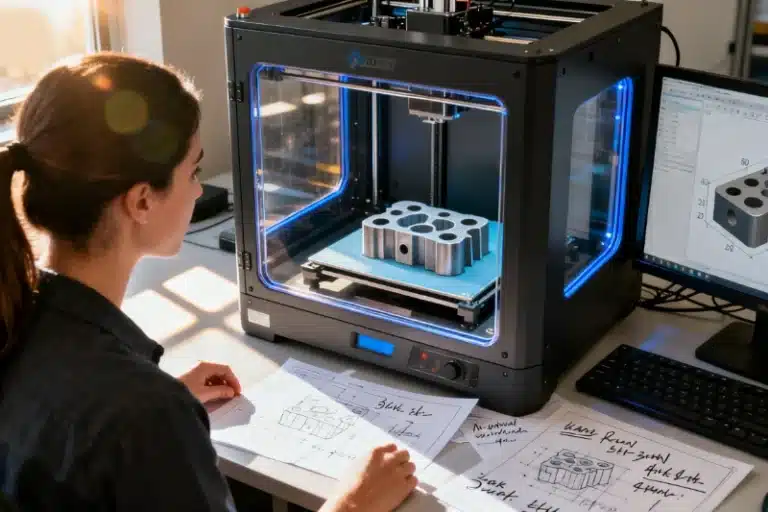
- Additive Manufacturing (3D Printing): Used to create mold inserts with conformal cooling channels, drastically reducing cycle times and improving part quality.
- AI & Simulation: Mold flow analysis software simulates how plastic or metal will fill a mold before it’s ever cut from steel, predicting and preventing defects. AI is now optimizing this process further.
- IoT & Connectivity: “Smart molds” equipped with sensors can monitor temperature, pressure, and wear in real-time, transmitting data to predict maintenance needs and prevent costly downtime on the production line.

Conclusion: A Partnership Driving the Future
The relationship between the NEV and mold industries is a perfect example of how innovation in one field propels advancement in another. The mold is the mother of manufacturing; without cutting-edge molds, there are no cutting-edge cars.
For the mold industry, the EV revolution isn’t a threat—it’s the opportunity of a generation. It demands higher value, more complex tools, and pushes the entire sector towards a smarter, more technologically advanced future.
Is your mold manufacturing business ready for the electric age?
New Energy Vehicle (NEV), Electric Vehicle (EV), Mold Manufacturing, Automotive Molds, Precision Tooling, Injection Molding, Die Casting, Battery Enclosure, Lightweighting, Hot Stamping, Industry 4.0, Additive Manufacturing, Conformal Cooling, Automotive Design, Sustainable Manufacturing.
Call to Action:
Looking for a mold partner experienced in the demanding requirements of EV components? Contact us today for a consultation.
Subscribe to our blog for more insights on the future of manufacturing.